
ELKTON, VA — While touted as a modernization of the Elkton Police Department (EPD), the launch of a new automated license plate recognition (ALPR) system on January 2, 2026, marks a significant shift toward permanent surveillance within the town. By embedding private-sector technology into the public square, the town has effectively turned its major thoroughfares into a digital dragnet.

The Privatization of Public Safety
The department’s partnership with Flock Safety—a private tech firm—represents a growing trend of “law enforcement as a subscription service”. The EPD has installed Falcon and Condor cameras along Route 33 and Route 340, turning local roads into data-collection points.
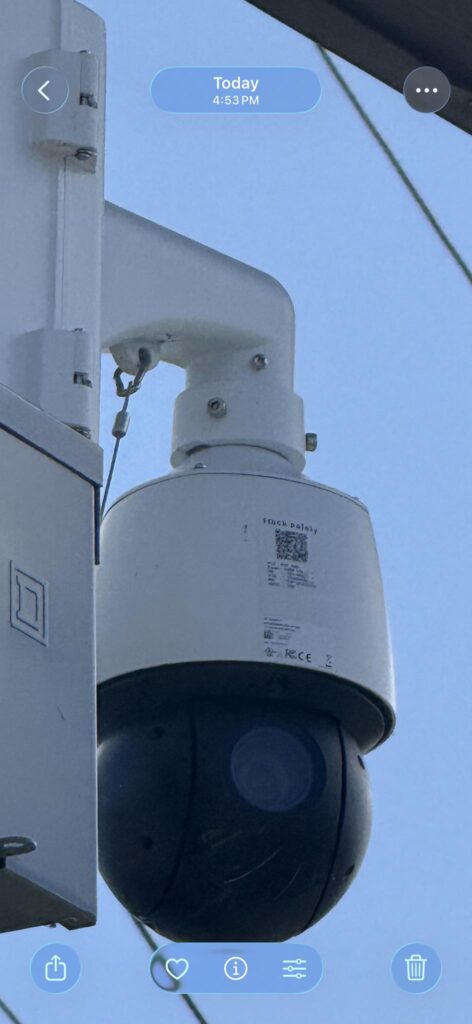
The financial and ethical implications of this partnership are noteworthy:
- Recurring Revenue for Private Tech: While a $12,500 grant covered the initial hardware, the town is now locked into a $12,300 annual subscription fee to keep the software running.
- Corporate-Property Alliances: The EPD secured license agreements with private property owners to host Flock’s hardware, blurring the lines between private business interests and state surveillance.
- Algorithm-Driven Policing: The system relies on proprietary algorithms to identify vehicle characteristics, essentially outsourcing investigative “instinct” to a private company’s code.
Mission Creep and the “Safety” Shield
As is common with surveillance expansion, the program is being sold under the banner of finding missing persons and stopping human trafficking. However, the system’s daily utility centers on tracking “stolen vehicles” and “outstanding warrants,” a broad net that inevitably captures the movements of thousands of innocent citizens.
“The technology identifies vehicle characteristics… for official law enforcement purposes only.” — Chief Michael L. King.
Critics often point out that “official purposes” can be an elastic term. While the EPD insists the cameras track cars, not people, the reality is that cars are almost always occupied by people whose movements are now being logged in a database.
The Privacy Illusion: 21 Days and a 5% Audit
The town points to § 2.2-5517 of the Code of Virginia as a safeguard, but the protections may be thinner than they appear:
- The 21-Day Window: The department is permitted to hold data on every driver passing through town for three weeks, regardless of whether they are suspected of a crime.
- Minimal Oversight: The EPD’s internal audit process only requires a review of 5% of queries every 30 days. This leaves 95% of the department’s system use potentially unmonitored for abuse or “stalking by camera”.
- Manufactured Suspicion: While an ALPR alert alone shouldn’t trigger a stop, the policy allows officers to stop drivers if they can “develop independent reasonable suspicion” — a standard that critics argue is easily met once an officer is already predisposed to pull a car over.
By implementing this system, Elkton has prioritized high-tech convenience over the traditional expectation of anonymous travel, raising questions about how much of the town’s budget — and its citizens’ privacy—will continue to be funneled into private surveillance coffers in the years to come.
Good work on starting with this!
This IS an area that people of all political viewpoints can come together.
There are roughly 75 cities/counties that have taken these down in the last year.
Keep rolling! We did it in Staunton, it can be done in Elkton!